Il fallait un sujet aussi singulier que les sports équestres — et le polo en particulier — pour que le talent rare de Frédéric Khan s’exprime pleinement à travers Cavalcades, une série consacrée à la puissance et à la poésie du mouvement.
Comment traduire à la fois l’amplitude et la précision des gestes, la maîtrise et la vitesse, ainsi que le dialogue intime entre le cheval et son cavalier ?
Dans cette dynamique captivante, Cavalcades révèle une alchimie subtile où se répondent ombre et lumière, contrastes et harmonies de couleurs, spontanéité du geste et précision du dessin.
Le mouvement du pinceau, la fluidité du couteau, la richesse et la générosité de la matière participent à une écriture picturale vibrante et profondément expressive.
“Le cheval porte son cavalier avec force et rapidité, mais c’est le cavalier qui guide le cheval. Le talent porte l’artiste avec force et rapidité, mais c’est l’artiste qui maîtrise son talent.”
— Wassily Kandinsky
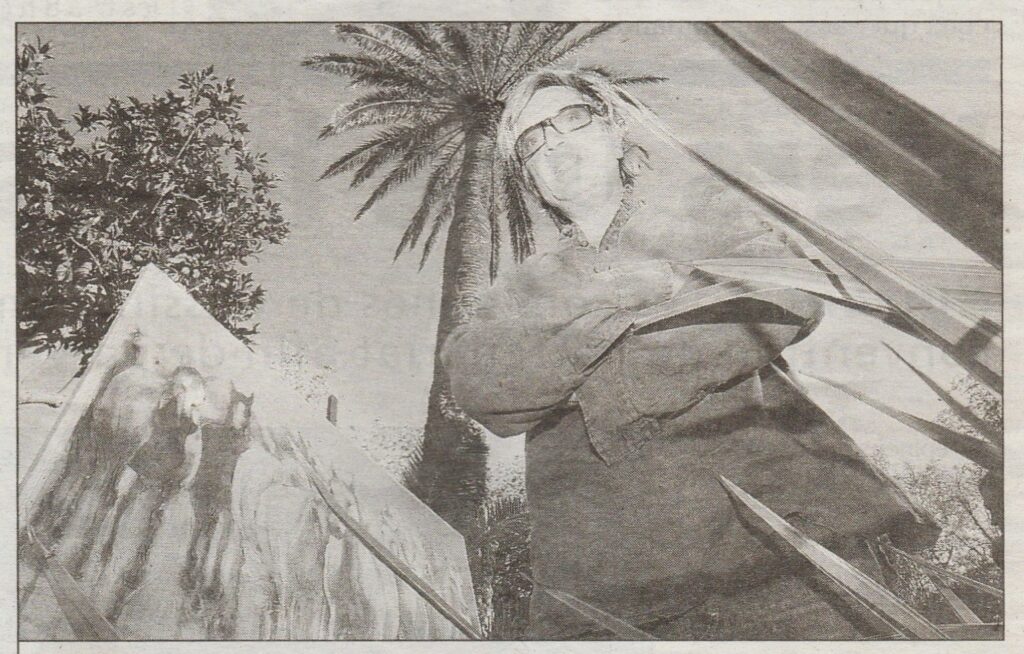
Biographie
D’origine italienne et iranienne, Frédéric Khan naît à Paris à la fin des années 1950.
Très tôt, il révèle un talent artistique remarquable, qu’il développe notamment aux Ateliers Jeunesse de l’École du Louvre.
À Montparnasse, au sein de l’Académie de la Grande Chaumière, il perfectionne son dessin et découvre sa passion pour la peinture.
Il poursuit ensuite sa formation à l’École Nationale des Beaux-Arts de Paris, où il affirme et libère son geste artistique.
Dans l’élan des années post-68, il met sa maîtrise technique au service d’une énergie créatrice profondément ancrée dans son œuvre.
Dans les années 1980, il part à la recherche de la lumière du Sud et s’installe à Saint-Tropez.
Son attrait pour l’ailleurs et les horizons lointains nourrit alors une démarche artistique ouverte sur le monde.
Au cours des années 1990, il entreprend de nombreux voyages à la rencontre des cultures et des regards artistiques : des rives de la Méditerranée jusqu’à l’Extrême-Orient, puis vers les États-Unis, avant de revenir en France au début des années 2000.
Ses origines à la fois occidentales et orientales lui offrent une vision singulière du monde contemporain.
Loin de tout exotisme anecdotique, son œuvre s’inscrit dans une continuité artistique profonde, reliant les premières expressions de l’humanité aux formes les plus contemporaines.
Animé par une énergie presque musicale — héritée de l’esprit du rock —, il insuffle à ses œuvres une vibration constante, où tout devient sensation et mouvement.
Par une alchimie subtile de couleurs, de contrastes et de lumière, ses gestes spontanés — éclats du pinceau, diffusion du spray, richesse de la matière — créent une résonance entre mémoire et anticipation, entre passé, présent et futur.
Son travail propose ainsi une vision d’un monde en transformation permanente, où dialoguent ombre et lumière, sens et forme, jeu et réflexion.
Aujourd’hui, ses œuvres sont principalement acquises par des collectionneurs privés et amateurs d’art.